info@orbitmediasolutions.com




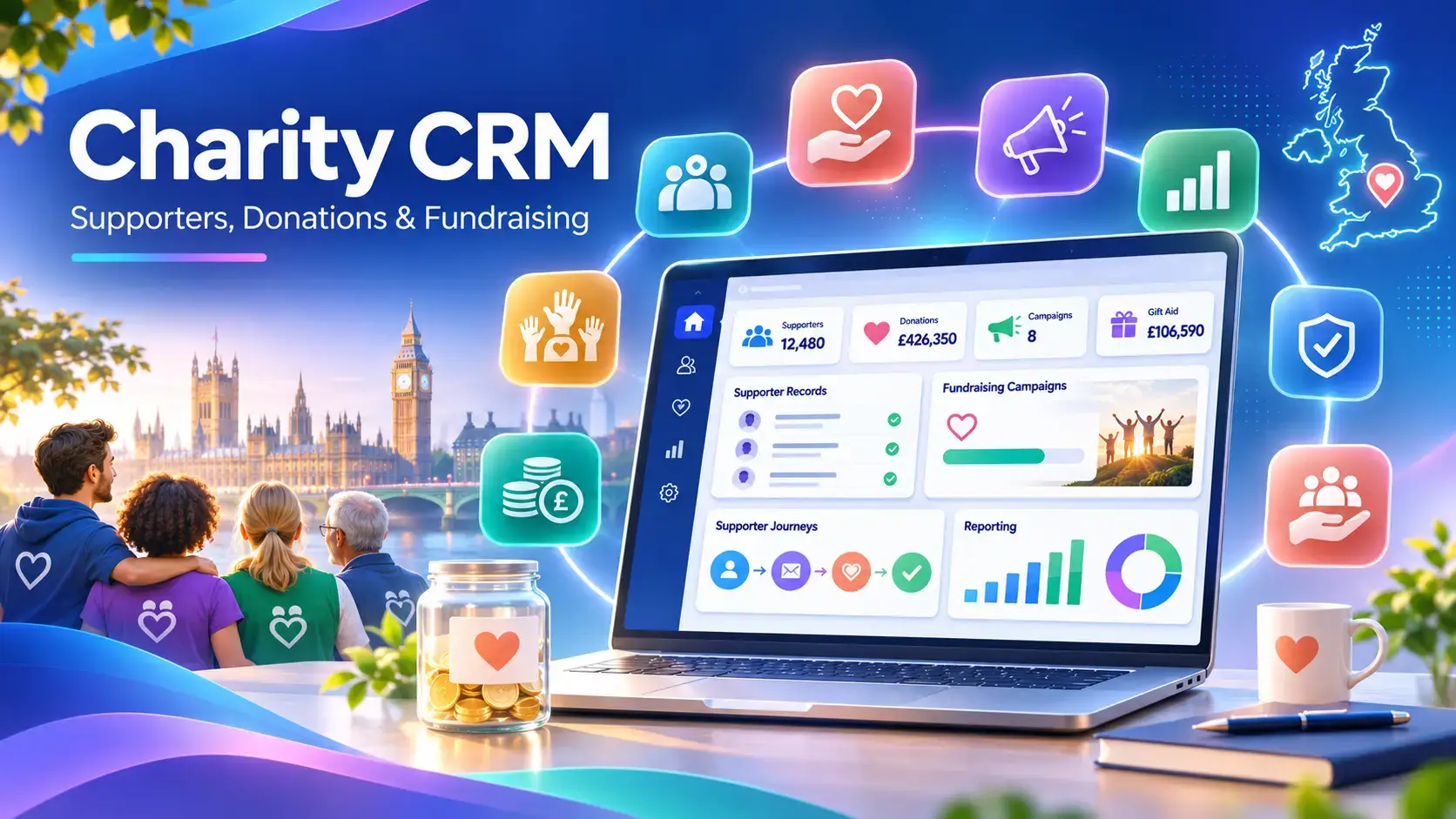
A Charity CRM is a constituent relationship management system. It helps charities manage information about donors, volunteers, partners, funders and, where appropriate, beneficiaries. Unlike a basic contact list, it connects people with donations, communications, activities and next steps.
Imagine a Bristol community charity receiving a £30 donation, a volunteer enquiry and an event registration from the same person. Separate spreadsheets might create three disconnected records. Modern CRM systems for charities can bring these interactions together, helping staff avoid duplicate messages and recognise ongoing involvement.
This helps colleagues respond thoughtfully without collecting unnecessary personal information.
Charity software should answer questions: Who donated? What needs following up? Which campaign needs attention?
Store supporter contact details, donation dates, relevant notes and communication preferences in a structured donor database. A giving timeline might show an initial gift, a later monthly commitment and the most recent thank-you message.
Check for duplicate contacts before importing data. A well-organised charity CRM system helps fundraisers recognise loyal supporters and understand previous interactions. Orbit's broader CRM solutions explain how structured relationship management can support different teams.
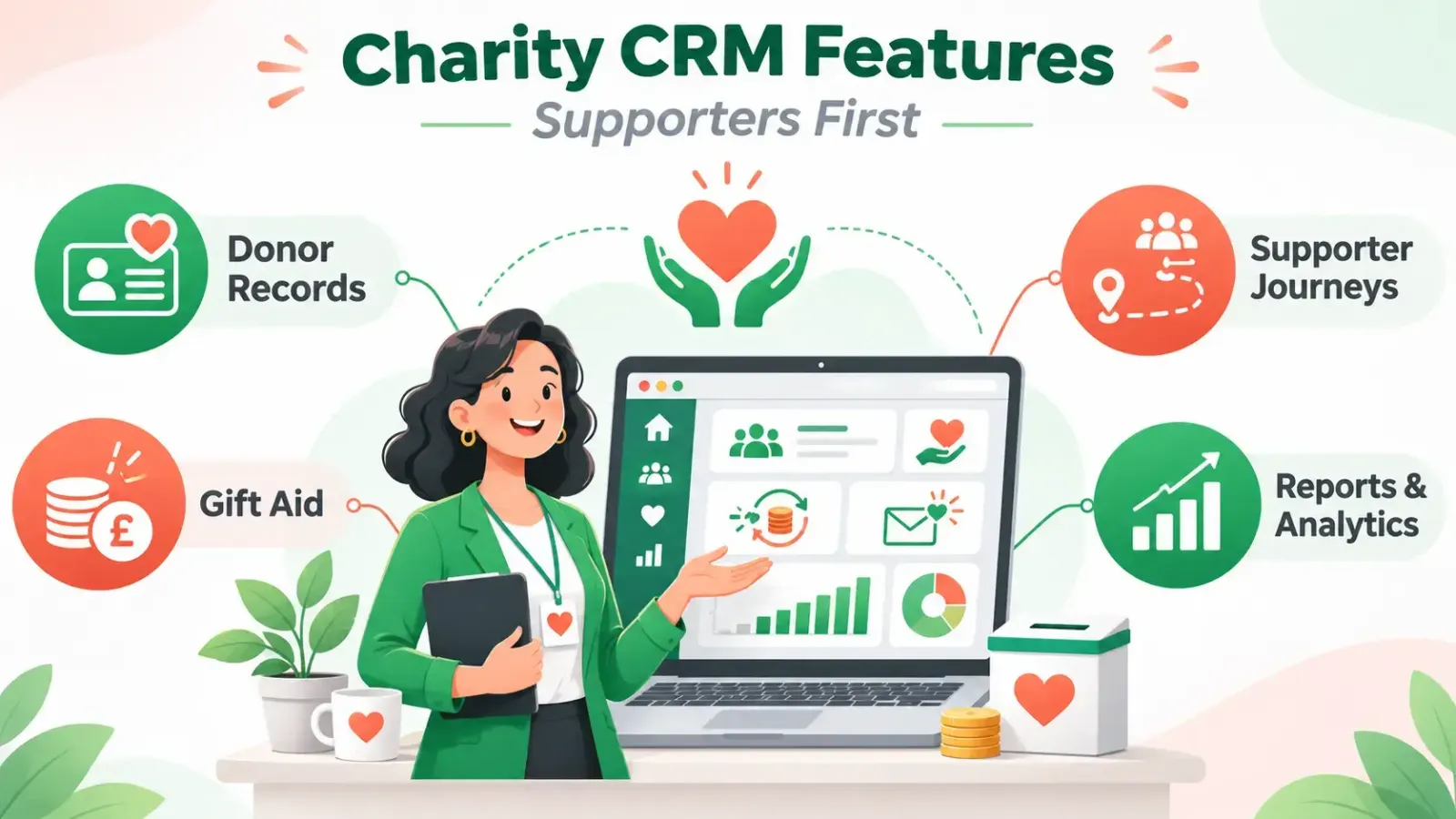
Link each donation to the correct supporter, appeal and project. Record whether a gift is one-off or recurring so finance staff can distinguish regular income from exceptional contributions.
UK charities also need accurate Gift Aid records. Under HMRC rules, eligible donations can generate an additional 25p for every £1 donated, provided the conditions are met. Retain valid declarations and supporting records; storing a donation in a CRM does not establish eligibility or submit a claim. See the official HMRC Gift Aid declaration guidance.
Not every supporter wants the same update. Where appropriate, group contacts by interests, giving history, event participation or preferred communication channel. A first-time donor may appreciate a simple acknowledgement, while a regular supporter may value a project update.
Configured workflows can create thank-you tasks, flag overdue follow-ups and prepare acknowledgements. Keep human oversight and check marketing permissions before sending promotional messages. Automation should support thoughtful relationships, not replace them.
A useful dashboard can show income by campaign, donation frequency, outstanding tasks and changes in supporter activity. For example, if a winter appeal attracts 60 donations but few repeat gifts, your team can review how donors were welcomed and updated.
Build trustee reports around meaningful questions: How much was raised? Which project received the funds? What needs attention? Reliable reporting begins with accurate records.
Successful fundraising involves understanding why people give and keeping promises after a donation arrives.
Give each appeal a target, dates, an owner and linked donation records. Compare a sponsored walk with an emergency appeal without mixing their results. Campaign records help explain fund allocation alongside the charity's accounting and reporting processes.
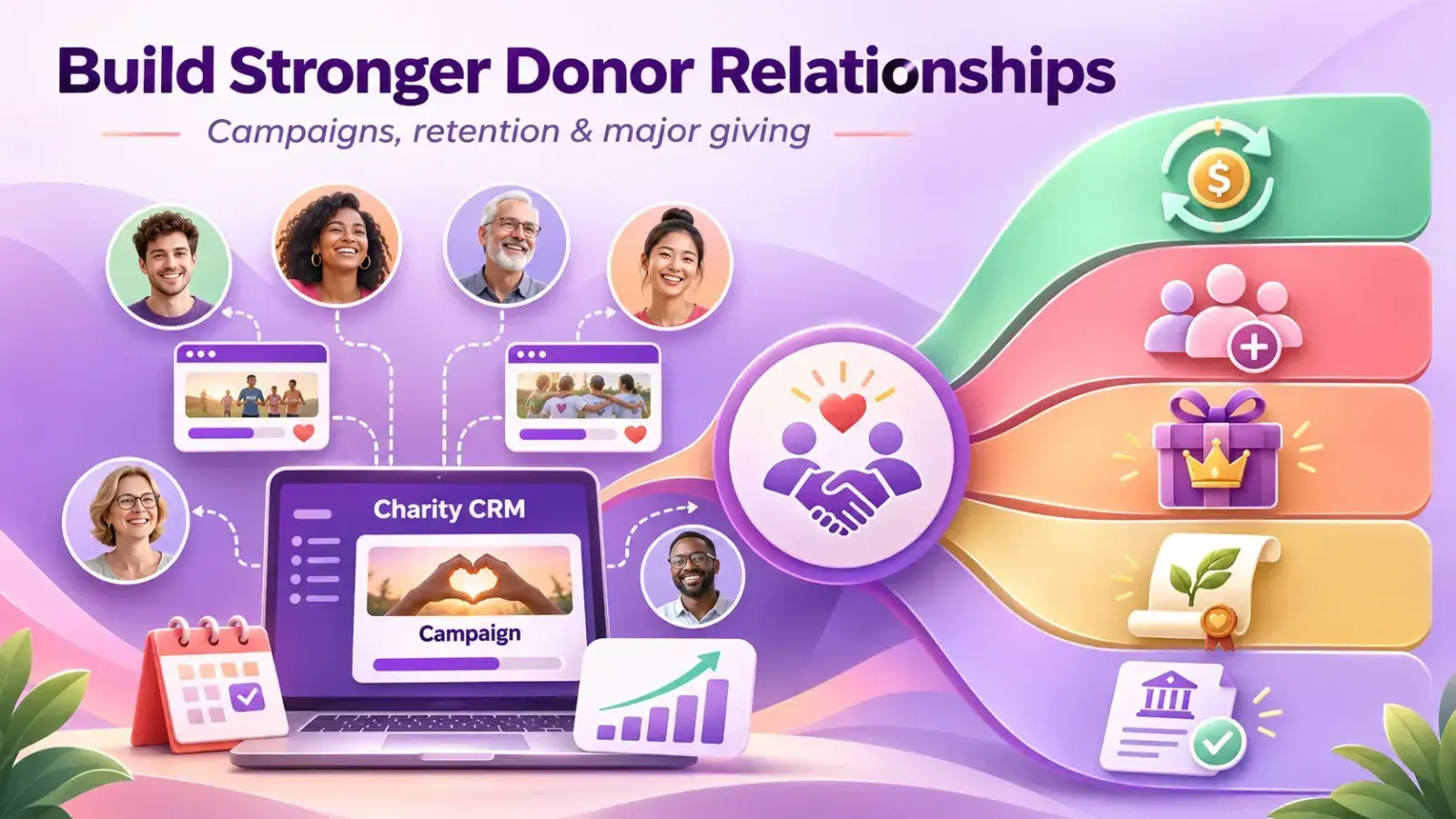
A timely thank-you and a relevant impact update help supporters feel recognised. Use reminders for stewardship calls and recurring-gift reviews rather than sending another appeal immediately. Respect requests for fewer messages or no further contact.
For major gifts and trust fundraising, keep meeting notes, proposal deadlines and commitments in appropriately restricted records. Legacy conversations require particular sensitivity. If your charity needs grant-tracking or legacy-giving workflows, confirm those requirements during setup; not every CRM includes them as standard.
Supporters do not only give money. Many contribute time, skills and local knowledge. Keeping volunteer information alongside activity records can reduce administration.
Record role interests, agreed availability, training reminders and appropriate contact details for authorised coordinators. At a food bank, this can make it easier to contact available volunteers without sharing a large spreadsheet. Confirm whether shift scheduling and attendance tracking require additional modules.
Where supported, link event registrations, fundraising activities and associated donations. Beneficiary case management needs additional care because it may involve sensitive information and stricter access controls. Do not combine confidential service-user records with general donor marketing lists.
A CRM becomes more useful when information moves reliably between the tools your charity already uses. First, identify where donations arrive and where financial information must be recorded.
With compatible connectors, an online donation can create or update a supporter record and link the payment to a campaign. Finance staff can then reconcile transactions in their accounting system.
For a practical example, explore our charity donation website portfolio, showcasing fundraising projects and online donation options developed by Orbit Media Solutions.
Check payment fees, refunds, duplicate handling and integration availability before launch. Explore Orbit's accounting software when reviewing your finance workflow.
Decide which system controls each contact field and marketing preference. Where supported, test synchronisation and opt-outs carefully. If your charity also needs wider operational software, browse all Orbit products rather than introducing unnecessary disconnected tools.
Supporters trust charities to handle personal information responsibly.
UK GDPR requires a valid lawful basis for processing personal data, clear privacy information, appropriate security and suitable retention practices. Limit access according to staff responsibilities, and review permissions when volunteers or employees leave. Establish procedures for correcting records and responding to individuals' data rights requests.
Beneficiary records may need additional safeguards or a separate system. Using a CRM does not automatically make an organisation compliant.
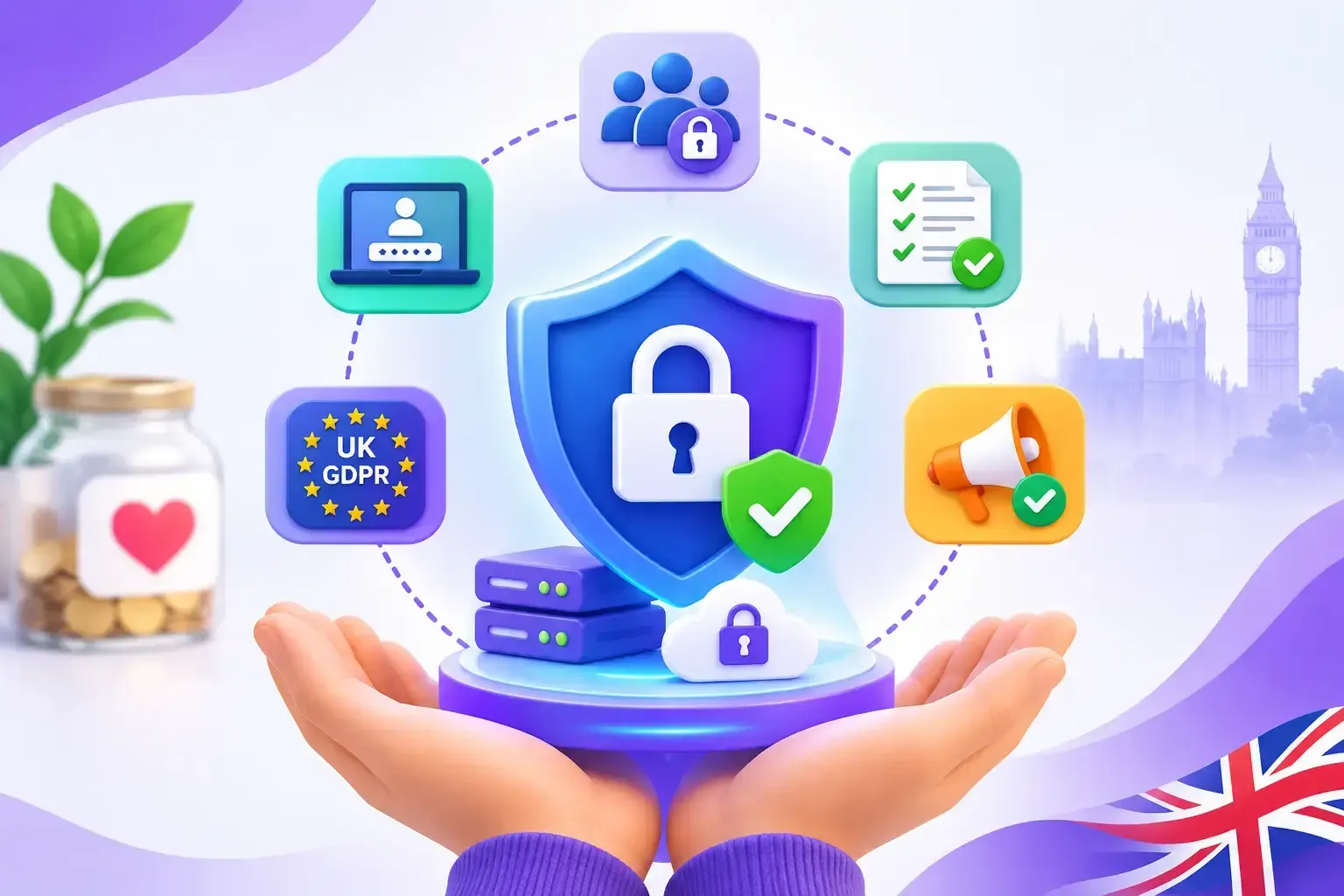
PECR regulates certain electronic fundraising communications. Since 5 February 2026, qualifying charities have been able to use a charitable purposes soft opt-in in specific circumstances, subject to conditions that include clear opt-out opportunities. This does not permit unrestricted marketing to existing contacts or remove UK GDPR obligations.
Consult the ICO's electronic marketing guidance and the Fundraising Regulator's data privacy guidance when planning supporter communications.
The best CRM for charities is not necessarily the largest platform. It is one that suits your team, budget, reporting needs and governance responsibilities.
Ask practical questions: Can staff find a supporter quickly? Can they explain a recent donation? Are follow-up tasks visible? Can they produce clear reports? Can they update communication preferences securely? Request a demonstration based on a real task, such as recording a donation and preparing a trustee summary.
When comparing charity CRM systems, UK organisations should assess Gift Aid support, data migration, integrations, training and ongoing costs. Ask whether the software only stores Gift Aid declarations or can also submit claims to HMRC. Check user limits, support fees and payment-provider charges. Advanced automation, volunteer scheduling and grants management may require additional configuration.
Orbit Media Solutions can discuss a suitable workflow and introduce its Charity CRM platform and demo.
Talk to Orbit Media Solutions about your supporters, fundraising campaigns and reporting needs. Explore a charity-focused demonstration and confirm which features and integrations suit your organisation.
Donor Database Management
Keep donor details, contact information and giving history organised in one central database for easier supporter management.


Donation Tracking
Track one-off and recurring donations, giving history and fundraising contributions to maintain accurate donation records.
HMRC Gift Aid Management
Record Gift Aid declarations, track eligible donations and organise the information needed for HMRC claims.
Fundraising Campaign Management
Plan fundraising appeals, monitor campaign targets and track donations to measure fundraising progress.
Supporter Relationship Management
Manage supporter profiles, communication history and engagement activities to build stronger, long-term donor relationships.
Recurring Donation Management
Monitor regular giving, track recurring contributions and manage donation schedules for better fundraising visibility.
Donor Segmentation
Group supporters by donation history, interests and engagement levels to deliver more relevant fundraising communications.
Automated Thank-You Reminders
Create donation acknowledgement tasks and follow-up reminders to maintain timely, meaningful donor communication.
Volunteer Management
Organise volunteer records, availability and assigned activities to support better coordination across your charity.
Charity Event Management
Manage fundraising event registrations, participant details and related donations in one organised workflow.
Fundraising Reports & Analytics
Monitor donations, campaign performance and supporter engagement with clear reports for better fundraising decisions.
Charity CRM Integration
Connect supported donation platforms, accounting software and communication tools to reduce manual data entry.
A donor database mainly stores donor details, donation history and giving records. A Charity CRM goes further by helping charities manage relationships with donors, volunteers and supporters, including communications, fundraising campaigns, follow-up tasks and reporting. However, many modern donor databases also include CRM features. UK charities should compare functionality, integrations and costs before choosing a system.
Yes. A Charity CRM can track one-off and recurring donations, maintain donor histories, and store Gift Aid declarations. Depending on the platform, it may also prepare or submit Gift Aid claims to HMRC. UK charities must check donation eligibility and retain valid declarations. For eligible donations, Gift Aid allows charities to claim an additional 25p for every £1 donated.
Charity CRM software in the UK can be free or cost hundreds of pounds per month. Donorfy Essentials is free for charities with up to 250 constituents, while Beacon starts at £37 per month. Pricing depends on contact numbers, users and features. Before choosing, compare VAT, setup, data migration, Gift Aid functionality and ongoing support costs.
The 30-70 rule is a commonly used guideline suggesting charities spend around 70% of their funds on charitable activities and no more than 30% on administration and fundraising. However, it is not a legal requirement in the UK. The Charity Commission sets no fixed spending ratio. Trustees must manage costs responsibly and ensure funds support their charity's purposes.
In the UK, wealthy individuals can legally reduce tax by donating to eligible charities. Higher- or additional-rate taxpayers may claim extra Income Tax relief on Gift Aid donations. Qualifying gifts of shares or property can also receive tax relief, while charitable bequests may reduce Inheritance Tax. Artificial donations designed to benefit donors can be challenged by HMRC.
The Wellcome Trust is generally considered the UK's wealthiest charity by investment assets. Its 2024–25 annual report valued its investment portfolio at £39.9 billion and its total funds, after liabilities, at £35.7 billion as of 30 September 2025. Wellcome funds research into health and science. Rankings based on annual income may name different organisations.
Copyright © 2026 Orbit
Choose which cookies we may use. You can change this at any time. Read our Cookie Policy.
Needed for the website to work (security, forms, remembering your cookie choice). Always on.
Remember choices you make, such as language and light/dark mode.
Help us understand how visitors use the site (for example Google Analytics), so we can improve it.
Used to measure our adverts and show you relevant ads on other sites (for example Facebook / Meta Pixel).