Transforming Modern Institutions: The Ultimate Guide to Education Management Software
The digital revolution has fundamentally altered how we live, work, and—most importantly—how we learn. Educational institutions, from small private schools to sprawling university campuses, are no longer just places of physical instruction; they are complex data hubs. Managing this data efficiently requires more than just spreadsheets and filing cabinets. It requires a robust Education Management Software (EMS).
In this comprehensive guide, we will explore why EMS is the backbone of modern education, the essential features you need, and how it can scale your institution’s growth.
Why Your Institution Needs an EMS in 2026
Efficiency is the currency of the modern age. Educational leaders are often bogged down by administrative tasks that pull them away from their primary mission: pedagogy. An EMS serves as a "central nervous system," integrating every department into a single, cohesive interface.
Data Centralization: No more fragmented records. Student profiles, financial history, and academic progress live in one secure place.
Real-Time Analytics: Access instant reports on attendance trends, fee collection, and student performance to make informed decisions.
Enhanced Communication: Bridge the gap between teachers, students, and parents with automated notifications and integrated portals.
Essential Features of a High-Performing EMS
When selecting or developing a system for your website, certain "non-negotiables" ensure the software provides actual value rather than just another digital hurdle.
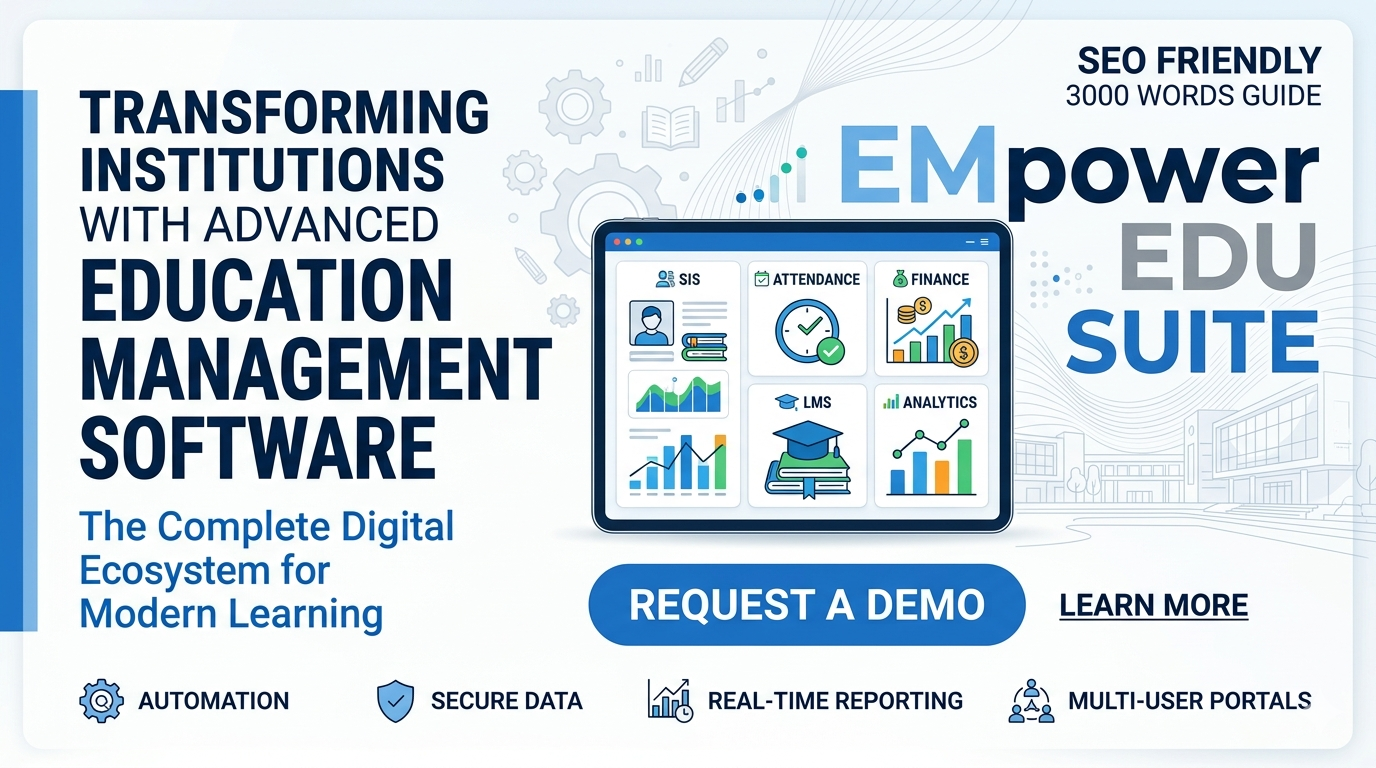
1. Student Information System (SIS)
The core of any EMS. This should track a student's entire lifecycle—from the initial inquiry and admission to alumni status. It includes personal details, medical records, and document management.
2. Advanced Attendance Tracking
Move beyond manual registers. Modern systems utilize biometric integration, RFID, or mobile app check-ins. Automated alerts can be sent to parents the moment a student is marked absent, ensuring safety and accountability.
3. Automated Fee & Finance Management
Managing tuition, late fees, and scholarships can be a logistical nightmare. A high-quality EMS automates invoicing and provides a secure gateway for online payments, significantly reducing human error and improving cash flow.
4. Learning Management System (LMS) Integration
Education is now hybrid. A built-in LMS allows teachers to upload course materials, host virtual classrooms, and manage online assessments seamlessly.