First Impressions Count More Than You Think
Research shows that users form an opinion about your website in just 0.05 seconds. That's faster than you can blink.
A dated or cluttered design immediately signals to visitors that your business might be outdated, too. I've seen companies lose potential clients simply because their website looked like it hadn't been updated since 2010.
Think about your own behaviour online. When you land on a website that looks unprofessional, what do you do? You probably hit the back button and move on to a competitor. Your potential customers are doing the same thing.
Your website design sets the tone for your entire business relationship. Get it right, and you're halfway to winning a new customer. Get it wrong, and they're gone before you've had a chance to showcase your brilliant products or services.
Website Design Builds Trust and Credibility
Trust is currency in the online world. UK consumers are savvy—they know what a professional website should look like, and they're quick to spot the warning signs of a dodgy operation.
A well-designed website with clear navigation, professional imagery, and up-to-date content tells visitors that you're a legitimate, trustworthy business. It shows you care about your online presence and, by extension, your customers.
I've worked with clients who've seen enquiry rates double simply by redesigning their website to look more professional. No change to their services, no price adjustments—just a better-designed website that made people feel confident about getting in touch.
Security indicators matter too. In the UK, with GDPR regulations in full force, visitors expect to see privacy policies, cookie notices, and SSL certificates. These elements need to be seamlessly integrated into your design, not slapped on as an afterthought.
Mobile Responsiveness Isn't Optional Anymore
Over 60% of UK web traffic now comes from mobile devices. If your website doesn't work properly on a phone or tablet, you're alienating more than half your potential audience.
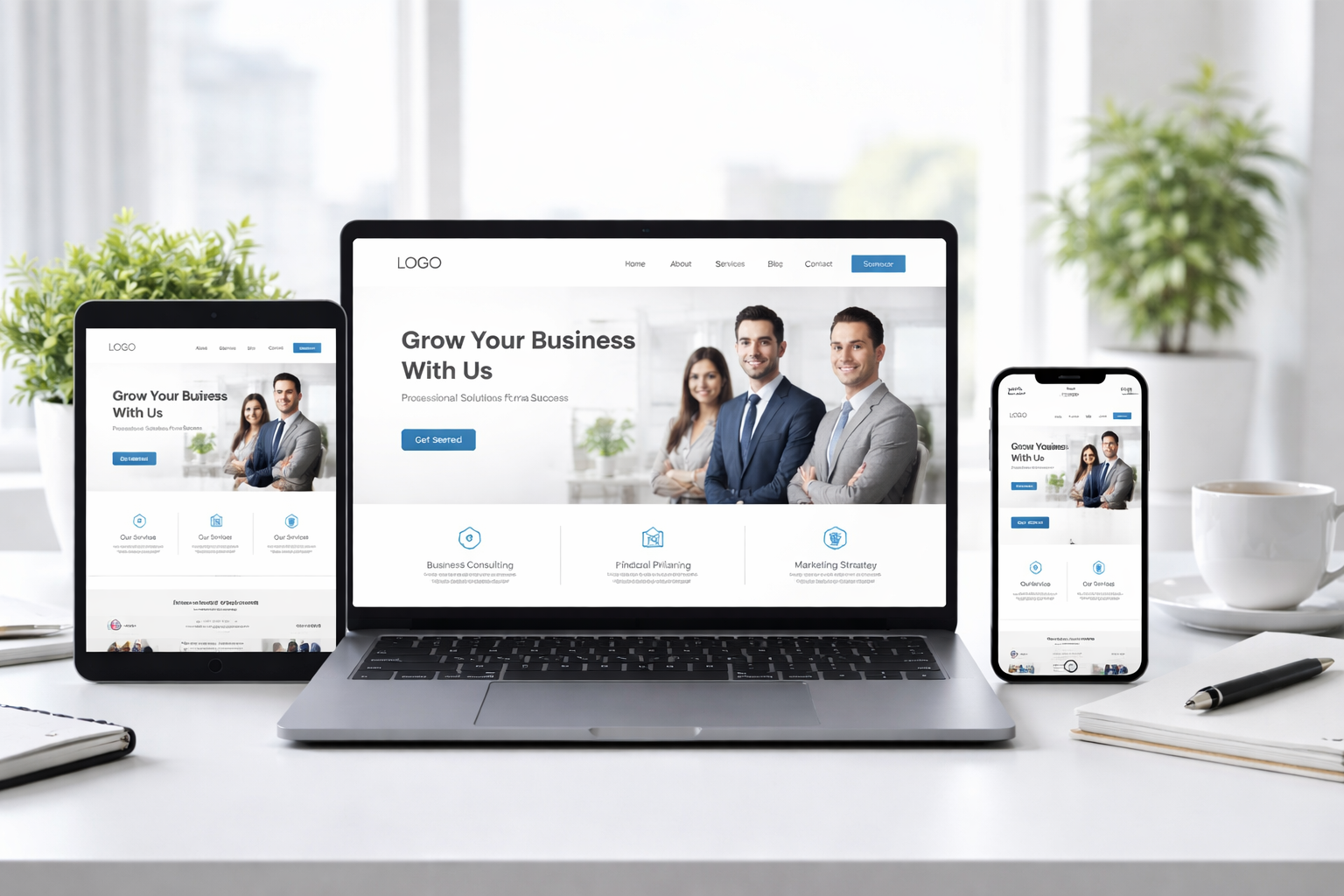
Mobile-responsive design means your website automatically adjusts to fit different screen sizes. Text remains readable, buttons are easy to tap, and images scale appropriately. It's not a luxury feature—it's an absolute necessity.
Google also prioritises mobile-friendly websites in search results. Since 2019, Google has used mobile-first indexing, meaning it primarily uses the mobile version of your site for ranking. A website that doesn't work well on mobile will struggle to rank, regardless of how good your content is.
I've seen Birmingham retailers lose out to competitors purely because their checkout process was impossible to complete on a smartphone. Every friction point in the mobile experience is a potential lost sale.
Good Design Improves User Experience and Navigation
User experience (UX) is about making your website intuitive and easy to use. When visitors can find what they're looking for quickly, they're more likely to convert into customers.
Clear navigation menus, logical page structures, and prominent calls to action all contribute to better UX. Your visitors shouldn't need a map to find your contact details or understand what services you offer.
Think about the journey you want users to take. Whether that's booking a consultation, requesting a quote, or making a purchase, your design should guide them smoothly through each step.
Fast loading times are part of good UX, too. UK internet users expect pages to load in under three seconds. Any longer, and you risk losing visitors. Optimised images, clean code, and proper hosting all contribute to site speed.
Website Design Directly Affects Conversion Rates
Conversion rate optimisation (CRO) is where design meets sales. Every design element—from button colours to form layouts—can impact whether visitors take action.
Strategic use of white space makes your content easier to digest and your calls to action more prominent. Contrasting colours draw attention to important elements, such as "Get a Quote" or "Book Now" buttons.
I've run countless A/B tests for UK clients, and small design changes can yield impressive results. Something as simple as changing a button from grey to orange increased clicks by 34% for one Surrey-based consultancy.
Trust signals like customer testimonials, industry accreditations, and client logos should be integrated into your design to maximise their impact. For UK businesses, displaying membership of organisations such as the FSB or industry-specific bodies adds credibility.
Accessibility Matters for Reach and Compliance
Web accessibility ensures people with disabilities can use your website effectively. This includes users with visual impairments, hearing difficulties, or motor limitations.
In the UK, the Equality Act 2010 requires service providers to make reasonable adjustments for disabled people. This extends to websites, making accessibility not just ethical but legally important.
Good accessible design benefits everyone, not just disabled users. Clear colour contrast, logical heading structures, and keyboard navigation improve the experience for all visitors.
Features like alt text for images, proper form labels, and video captions should be built into your design from the start. Retrofitting accessibility is always more expensive and time-consuming than getting it right from the start.
Your Website Design Reflects Your Brand Identity
Your website should be a digital extension of your brand. Consistency in colours, fonts, and tone of voice reinforces your brand identity and makes you more memorable.
A London law firm should have a very different design aesthetic from a Brighton surf shop. Your design choices should reflect your industry, target audience, and company values.
Every design element sends a message. Professional typography suggests reliability and expertise. High-quality imagery conveys attention to detail. Even your choice of colours has psychological implications—blue suggests trust and stability, whilst orange conveys energy and enthusiasm.
I've seen businesses struggle because their website design didn't match their offline brand. Customers felt confused and disconnected, which eroded trust. Your website should feel like a natural extension of your physical premises or printed materials.
SEO Benefits Start With Good Design
Search engine optimisation isn't just about keywords and backlinks. Technical SEO factors like site structure, loading speed, and mobile-friendliness all depend on good design.
A well-structured website with clear hierarchies helps search engines understand your content. Proper use of heading tags (H1, H2, H3) signals content importance and improves your chances of ranking for relevant keywords.
Clean, semantic code makes it easier for Google to crawl and index your pages. Bloated code or excessive JavaScript can hinder search engine bots, potentially harming your rankings.
Schema markup—structured data that helps search engines understand your content—should be built into your site's design framework. For UK businesses, local schema is particularly valuable for appearing in location-based searches.
The Cost of Poor Website Design
Whilst investing in good design requires upfront expenditure, poor design costs you money every single day through lost opportunities.
Bounce rates soar when visitors land on an unattractive or confusing website. High bounce rates signal to Google that users aren't finding what they need, which can harm your search rankings over time.
Customer service costs increase when your website doesn't answer basic questions clearly. If visitors can't find information about your opening hours, prices, or services, they'll phone instead—tying up your staff with queries that should be handled online.
I've worked with Nottingham retailers who were spending thousands on Google Ads but seeing minimal returns because their website design was losing customers at the final hurdle. The traffic was there, but the design wasn't converting it.
Future-Proofing Your Digital Presence
Technology evolves rapidly, and your website design needs to adapt. What worked five years ago looks dated now, and what's current today will look old in a few years.
Building with scalability in mind means your website can grow with your business. Whether you're adding new product lines, expanding into new regions, or integrating additional functionality, your design framework should accommodate change.
Modern content management systems (CMS) like WordPress make it easier to update content without needing a developer for every small change. Your design should empower you to maintain your website effectively.
Consider emerging trends like voice search optimisation and AI chatbots. Your website's design should be flexible enough to incorporate these technologies as they become mainstream.
Practical Steps for UK Businesses
If your current website isn't performing, start by auditing what's not working. Use tools like Google Analytics to identify where users are dropping off and which pages have high bounce rates.
Gather feedback from actual customers. They'll often highlight issues you've become blind to because you're too close to the business.
When redesigning, prioritise mobile experience first. Most of your UK visitors will be browsing on phones, so start there and work outwards to desktop.
Don't neglect compliance requirements. UK-specific considerations, such as GDPR cookie notices, VAT display on prices, and distance selling regulations, should be integrated into your design, not bolted on afterwards.
Conclusion
Website design isn't a vanity project—it's a fundamental business tool that affects everything from customer trust to search engine rankings.
For UK businesses operating in an increasingly digital marketplace, a well-designed website is essential for staying competitive. It's the foundation of your online presence and often the determining factor in whether a potential customer chooses you or a competitor.
The businesses that succeed online are those that recognise website design as an ongoing investment, not a one-off project. Your website should evolve with your business, your customers' expectations, and technological advances.
Getting your website design right sets you up for success across all your digital marketing efforts. It's where SEO, content marketing, and customer experience all come together.
Want expert help with your website design? Learn more at Orbit Media Solutions – we specialise in creating professional, compliant websites for UK businesses.